

 CALL NOW
A chest injury can disrupt your breathing, limit your movement, and put your overall health at serious risk. These injuries happen in car accidents, slip and fall incidents, motorcycle crashes, and situations involving blunt-force trauma or crushing pressure.
Some chest injuries are obvious right away, with visible bruising, sharp pain, and difficulty breathing. Others build slowly, worsening over hours or days before the full damage becomes clear. Because the chest protects the lungs, heart, ribs, and other organs, even a seemingly minor impact to the thorax deserves careful attention.
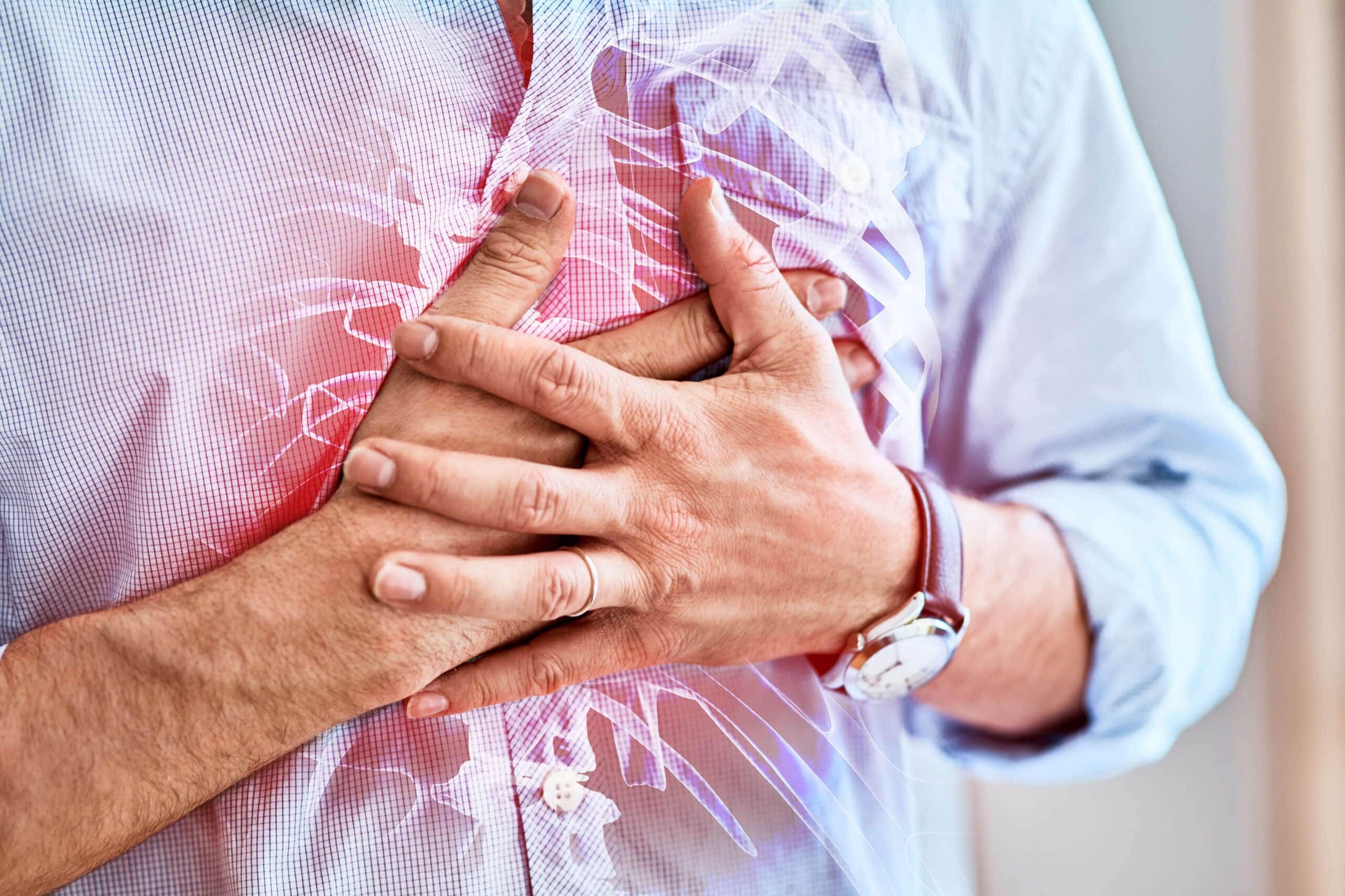
What is a chest injury?
A chest injury is any physical damage to the structures between the neck and the abdomen. That includes the ribs, sternum, chest wall muscles, lungs, diaphragm, trachea, esophagus, blood vessels, and nerves running through the thorax. Chest injuries range from mild bruising and soft tissue strains to life-threatening conditions like internal bleeding, a collapsed lung, or cardiac tamponade.
The chest cavity holds organs that keep you alive, so any trauma to this area, whether from blunt impact or a penetrating wound, needs medical evaluation. Pain when breathing, coughing, or moving your body is a warning sign that should never be ignored.
Common causes of chest injuries
Chest injuries happen in a wide range of accidents. The force involved, the angle of impact, and whether objects strike the body all influence how severe the damage becomes.
Car accidents
Motor vehicle collisions are among the most frequent causes of blunt chest trauma. The steering wheel, seat belt, airbag, or dashboard can strike the chest during sudden impact, causing rib fractures, pulmonary contusions, or damage to the chest wall. Even a low-speed fender bender can produce enough force to bruise ribs or strain chest muscles.
Slip and fall accidents
A hard fall onto a floor, staircase, or pavement can drive force directly into the ribs and sternum. Slip and fall accidents often result in bruised or fractured ribs, especially among older adults whose bones are more fragile. Landing on the side or chest can also damage the chest wall and surrounding soft tissue.
Motorcycle, bicycle, and pedestrian accidents
Riders and pedestrians lack the protective shell of a vehicle. A motorcycle crash, bicycle collision, or pedestrian accident often throws the person into the ground, a vehicle, or debris, causing direct blunt trauma to the chest, ribs, and lungs.
Crush injuries or blunt-force trauma
Heavy objects falling on the body, being pinned between surfaces, or taking a direct blow to the chest can fracture multiple ribs, damage the lungs, or injure internal organs and blood vessels within the chest cavity.
Symptoms of a chest injury
Symptoms of chest injuries can vary widely depending on the type and severity of the trauma. Some signs appear immediately, while others develop over hours. Common symptoms include:
- Chest pain that worsens with breathing, coughing, or movement
- Shortness of breath or difficulty taking a deep breath
- Visible bruising, swelling, or tenderness over the ribs or sternum
- Fast, shallow breaths because normal breathing is too painful
- Dizziness, fatigue, or lightheadedness
- Sharp rib pain when twisting the body or pressing on the injured area
In serious cases, watch for coughing up blood, extreme difficulty breathing, rapid heart rate, or pale skin. These are signs of a life-threatening condition like internal bleeding, a collapsed lung (pneumothorax), or hemothorax. A person with broken ribs may instinctively take small, shallow breaths and support the injured area with a hand or arm because deep breathing is too uncomfortable.
Different types of chest injuries
Chest injuries are generally classified into two main categories: blunt trauma (caused by impact force without breaking the skin) and penetrating trauma (where an object pierces the chest wall). The table below outlines the most common types:
|
Type of injury |
Description |
Severity |
|
Bruised chest / chest wall injury |
Soft tissue damage to muscles and skin over the ribs. Painful but typically heals with rest. |
Mild to moderate |
|
Broken ribs (rib fracture) |
One or more fractured ribs. Makes breathing and movement difficult. Usually heals within 8 weeks. |
Moderate |
|
Flail chest |
Multiple adjacent ribs broken in multiple places, causing paradoxical movement of the chest wall during breathing. |
Severe |
|
Sternum or cartilage injury |
Fracture or damage to the breastbone or cartilage connecting ribs to the sternum. |
Moderate to severe |
|
Collapsed lung (pneumothorax) |
Air leaks into the space between the lung and chest wall, causing the lung to collapse. |
Severe |
|
Hemothorax |
Blood accumulates in the pleural space, compressing the lung and potentially causing shock. |
Severe |
|
Pulmonary contusion |
Bruising of lung tissue that causes fluid buildup and impairs respiratory function. |
Severe |
|
Cardiac tamponade |
Fluid or blood fills the sac around the heart, reducing its ability to pump. |
Life-threatening |
When to get medical help
Urgent medical attention is critical if you experience any of the following after chest trauma:
- Severe difficulty breathing or inability to take a full breath
- Coughing up blood
- Rapid heart rate, dizziness, or pale skin (signs of shock or internal bleeding)
- Extreme pain that does not respond to over-the-counter pain relief
- Fainting or loss of consciousness
Chest injuries can turn life-threatening fast. An injury that feels like a bruise may actually involve fractured ribs pressing against the lungs or slow internal bleeding within the chest cavity. Any serious chest pain after an accident should be evaluated in the emergency department right away, even if the pain seems manageable at first.
How doctors diagnose a chest injury
Physical examination
Doctors check for tenderness over the ribs and sternum, listen to lung sounds, and look for visible bruising, swelling, or deformity. They also assess whether breathing is labored or painful.
Imaging tests
Chest X-rays are often the first step in diagnosis, followed by CT scans that provide detailed cross-sectional images of the ribs, lungs, and surrounding structures. These tests can reveal fractures, air leaks, fluid buildup, and organ damage.
Medical history and symptom review
The doctor will ask how the injury happened, when symptoms began, and whether pain has worsened. This context helps determine the likely type and severity of the chest trauma.
Follow-up care
Ongoing monitoring may be necessary if symptoms persist or worsen. Repeat imaging, breathing tests, or specialist referrals are common for more serious chest injuries.
Chest injury recovery time
Recovery depends on what got hurt and how badly. Minor bruises to the chest wall may heal in two to four weeks with rest and over-the-counter pain relief. Fractured ribs typically take six to eight weeks, during which breathing exercises are important to prevent complications like pneumonia or chest infection. Treatment for rib fractures usually involves pain management rather than surgery, since the ribs heal on their own in most cases.
More serious injuries, like flail chest, pulmonary contusions, or a collapsed lung, may require hospitalization, tube thoracostomy, or surgical intervention. During recovery, sleep may be disrupted, physical movement may be limited, and daily activities like lifting, driving, or coughing can remain painful for weeks. Follow-up care and controlled breathing exercises are part of the standard recovery process.
Long-term effects of a chest injury
Breathing problems
Lung damage, pulmonary contusions, or repeated chest infections can reduce lung capacity. Some patients find that breathing during physical activity never fully returns to normal after a severe chest injury.
Chronic pain
Ongoing rib or sternum pain may persist for months or longer. This can affect sleep, concentration, and the ability to carry out routine tasks without discomfort.
Mobility limitations
Turning, lifting, bending, or raising the arm on the injured side may stay difficult. Muscles and nerves around the chest wall can take a long time to recover.
Emotional and work impact
Persistent pain and breathing problems often interfere with job performance, physical hobbies, and quality of life. The inability to do what you once did without pain takes a real toll, both financially and emotionally.
How a chest injury can affect a legal claim
A chest injury caused by someone else’s negligence, whether in a car accident, a fall on unsafe property, or another preventable incident, can form the basis of a personal injury claim. These injuries often lead to emergency room visits, chest imaging, follow-up appointments, missed work, and ongoing treatment costs.
Insurance companies sometimes undervalue chest injuries because the damage is not always visible from the outside. That is why thorough medical records, diagnostic test results, and detailed symptom documentation matter. Proving that the other party acted negligently, and that their actions caused your chest injury, is what allows you to pursue compensation. A medical paper trail connecting the accident to your diagnosis strengthens the claim.
Compensation in a chest injury case
Chest injuries can lead to significant medical expenses, lost wages, and lasting pain. Compensation may cover both economic and non-economic damages.
Economic damages
These include medical bills from emergency care, imaging (X-rays, CT scans), medication, hospital stays, physical therapy, and any future treatment. Lost income from missed work or reduced hours also falls under economic damages.
Non-economic damages
Pain and suffering, emotional distress, loss of enjoyment of life, and reduced quality of daily living. Chest injuries that cause chronic breathing problems or persistent pain often carry higher non-economic damage values.
Future damages
If complications continue or a chest injury leaves permanent limitations, compensation may account for ongoing medical care, reduced earning ability, and long-term effects on your quality of life.
What to do after a chest injury
The steps you take after a chest injury can affect both your recovery and any legal claim you file later. Here is what to focus on:
- Seek medical care immediately, even if the pain feels mild at first.
- Follow all treatment instructions from your doctor, including rest and breathing exercises.
- Keep records of every medical visit, diagnostic test, and prescription.
- Track your symptoms day by day, especially changes in breathing or pain levels.
- Save photos of visible injuries, accident reports, and contact information for any witnesses.
- Avoid giving recorded statements or signing documents from insurance companies without consulting a lawyer.
Detailed records give your medical team a clear picture of your recovery and give a personal injury lawyer the documentation needed to build your case.
Why talk to a lawyer after a chest injury
If another person’s carelessness caused your chest injury, a lawyer can help you document the full scope of the damage, from emergency treatment and lost wages to pain that lingers for months. Dealing with insurers on your own often results in a settlement that does not reflect the true value of your injuries. An attorney can handle the back-and-forth with insurance adjusters, gather the medical evidence that ties your injury to the accident, and make sure your claim accounts for both current and future costs.
FAQs about chest injuries
Speak with a lawyer about a chest injury
If you or someone close to you suffered a chest injury because of another person’s negligence, you may have a right to compensation for medical bills, lost income, and pain. Contact our team for a free consultation to discuss what happened and what your options look like going forward.