

 CALL NOW
Soft tissue injuries affect the muscles, tendons, and ligaments that hold your body together and allow it to move. They happen in car accidents, slip and fall incidents, sports collisions, and everyday moments where sudden impact or twisting catches you off guard.
Because soft tissue damage does not always show up on X-rays or standard imaging, insurance adjusters and even some doctors underestimate these injuries. The pain, though, is real, and so is the recovery time. Below you will find a plain-language breakdown of what soft tissue injuries are, how they are treated, and what to do if someone else caused yours.
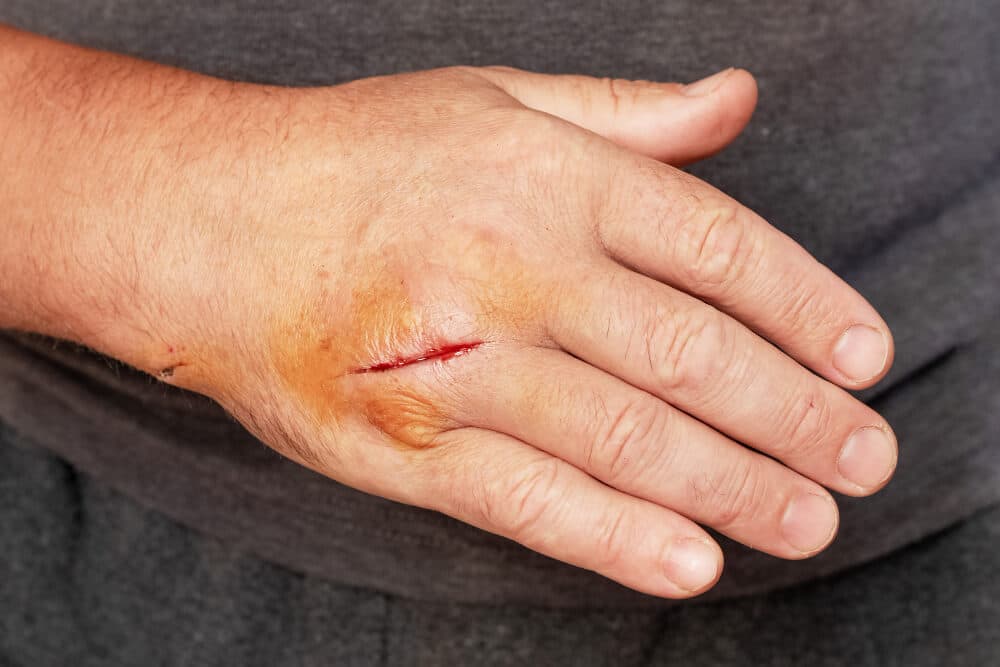
What is a soft tissue injury?
A soft tissue injury (STI) is damage to the muscles, tendons, ligaments, skin, fat, or fibrous tissues of the body. Tendons are the fibrous cords that attach muscles to bones. Ligaments connect bones to other bones and stabilize joints. These soft tissues also protect blood vessels and reduce friction between moving parts during physical activity. Unlike a broken bone, which appears clearly on an X-ray, soft tissue damage involves the structures that hold you together and allow you to move.
Common soft tissue injuries include sprains, strains, contusions, tendon tears, and ligament tears. Some are minor. A mild ankle sprain, for example, may heal with rest and ice within a week or two. Others, like a complete tear of the Achilles tendon or a torn ligament in the knee, can take months of physical therapy or even surgical repair before you feel close to normal again. The severity depends on where the tissue injury occurred, how much force was involved, and whether the tissue suffered a partial tear or a complete tear.
Common causes of soft tissue injuries
Soft tissue injuries are broadly categorized by how they occur: acute injuries caused by sudden trauma and overuse injuries caused by repetitive stress. Here are the most frequent scenarios.
Car accidents
The sudden impact of a collision sends excessive force through your neck, back, and shoulders. Muscles, tendons, and ligaments that were not braced for the hit get stretched or torn. Whiplash, one of the most common soft tissue injuries from a crash, happens when your head snaps forward and back within seconds. If you were hurt in a wreck, a Tampa car accident lawyer can help.
Slip and fall accidents
A fall on a hard surface, such as a wet grocery store floor or an uneven sidewalk, can twist, stretch, or tear soft tissues in the back, knee, shoulder, or wrist. The blunt force of hitting the ground often causes contusions and severe sprains. Slip and fall injuries are among the leading causes of soft tissue damage in older adults.
Motorcycle, bicycle, and pedestrian accidents
Riders and pedestrians have almost no barrier between themselves and the road. A direct blow from a vehicle or the pavement can cause deep bruising, sprains, strains, and torn ligaments. Motorcycle accidents, bicycle crashes, and pedestrian collisions all carry a high risk of soft tissue injury.
Work-related or sports injuries
Repetitive movements on a job site or during contact sports put small stresses on muscles, tendons, and ligaments over time. These overuse injuries, such as tendinitis (inflammation of a tendon) or bursitis (inflammation of the small sacs that cushion bones), build gradually. A single awkward lift or sudden twist can also cause an acute injury. Warming up before physical activity and listening to your body can help prevent soft tissue injuries.
Symptoms of a soft tissue injury
Soft tissue injuries typically cause immediate pain, localized swelling, and visible bruising. But not every symptom appears right away. Some people feel fine after an accident, only to wake up the next morning unable to turn their head. Delayed symptoms are common, which is one reason back pain can start days after an accident.
Watch for any of the following:
- Pain at the injured area, especially with movement
- Swelling or painful swelling around the joint or muscle
- Bruising or discoloration from blood pooling beneath the skin
- Stiffness that limits your range of motion
- Tenderness when pressing on the affected area
- Muscle spasm or cramping
- Muscle weakness in the injured limb
- Pain that gets worse over the first 48 to 72 hours
If your symptoms appeared a few days after an accident rather than immediately, that does not make them less real. Many soft tissue injuries, including severe sprains and strains, take time to reach full painful swelling.
Different types of soft tissue injuries
The types of soft tissue injuries you might face depend on the force involved and the area of the body that absorbs it.
|
Type |
What it is |
Common details |
|
Sprains |
A stretch or tear of a ligament, the fibrous cords that connect bones to other bones. |
Often affects ankles, knees, and wrists. Graded from mild (Grade I) to severe sprains (Grade III, a complete tear). |
|
Strains |
An injury to a muscle or tendon, the cords that attach muscles to bones. |
Common in the back, neck, and lower leg. Ranges from a simple stretch of muscle fibers to a complete tear. |
|
Contusions |
A bruise caused by a direct blow or blunt force that crushes muscle fibers and blood vessels without breaking the skin. |
Results in discoloration and blood pooling. Typically occurs in contact sports or falls onto a hard surface. |
|
Tendon or ligament tears |
A partial tear or complete tear of a tendon or torn ligament, often requiring extended treatment. |
May need surgical repair. Recovery can last several months. The Achilles tendon and knee ligaments are frequent sites. |
Acute sprains and strains are clinically classified into three distinct grades based on structural damage:
- Grade III (complete rupture with severe pain and instability).
- Grade I (mild stretching)
- Grade II (partial tear with moderate sprains)
When to get medical help
Not every bruise or sore muscle needs a trip to the emergency room. But some symptoms should be checked quickly:
- Severe pain that does not improve with rest ice compression and elevation (RICE)
- Swelling that keeps getting worse instead of going down
- Muscle weakness or an inability to bear weight on the injured area
- A popping or snapping sound at the time of injury
- Numbness or tingling, which may signal nerve damage
Early treatment can reduce swelling, reduce pain, and prevent further injury, which helps promote healing and speed up the overall healing process. Immediate care for soft tissue injuries typically focuses on reducing inflammation and protecting the tissue during the first 48 to 72 hours.
Over-the-counter anti-inflammatory medication and cold packs applied to the affected area are standard first steps. Soft tissue injuries should not be dismissed just because they are common. A healthcare professional can determine the exact severity of your injury and recommend the right soft tissue injury treatment.
How doctors diagnose a soft tissue injury
Physical examination
A doctor will check the injured area for swelling, tenderness, and discoloration. They will test your range of motion and muscle strength, looking for signs of a partial tear, complete tear, or other soft tissue damage.
Imaging tests
X-rays help rule out broken bones. MRI scans and ultrasound can reveal damage to muscles, tendons, and ligaments that standard X-rays miss. These imaging tests are especially useful for suspected tears or deep contusions.
Medical history and symptom review
Doctors consider how the injury happened, what you felt at the time, and when common symptoms like pain or swelling first appeared. Your medical history also helps them identify whether a prior condition might affect recovery.
Follow-up care
Repeat visits may be needed if pain, muscle weakness, or stiffness continues beyond the expected recovery window. Follow-up appointments help your doctor catch further damage early.
Soft tissue injury recovery time
How long a soft tissue injury takes to heal depends on what was damaged and how badly. Sprains, strains, and other soft tissue injuries each follow their own timeline. Most soft tissue injuries fall into one of three severity levels:
|
Injury severity |
Typical recovery |
Treatment approach |
|
Mild (Grade I) |
1 to 3 weeks |
Rest, ice, compression, and elevation (RICE). Over-the-counter pain relievers to reduce pain. |
|
Moderate (Grade II) |
4 to 8 weeks |
Physical therapy, cold packs, compression, and gradual return to physical activity. |
|
Severe (Grade III) |
3 to 12+ months |
May require surgical repair or reconstruction. Extended physical therapy to restore strength and mobility. |
The PEACE & LOVE framework guides the transition from acute care to active recovery: in the first 48 to 72 hours, protect the tissue, elevate, avoid anti-inflammatory medication initially, compress, and educate yourself on expected timelines.
After that initial window, gradually load the tissue, stay optimistic, increase blood flow through movement, and begin targeted exercises. Strains in the lower leg or back often respond well to applying ice early and then transitioning to gentle stretching. Pushing too hard too soon, or returning to physical activity before the muscle fibers have fully repaired, risks further injury.
Long-term effects of a soft tissue injury
Some soft tissue injuries resolve fully. Others leave lasting problems that affect your day-to-day life.
Chronic pain
When soft tissues do not heal completely, pain can linger for months or years. Chronic pain in the neck, back, or joints can disrupt sleep, limit your ability to work, and wear you down emotionally.
Reduced mobility
Scar tissue that forms during healing may restrict your range of motion. Stiffness or muscle weakness around the affected area can make simple tasks, like reaching overhead or climbing stairs, difficult.
Reinjury risk
Tissue that has only partially healed is weaker than it was before the injury. Without proper rehabilitation, the same area is more likely to be injured again, especially during physical activity or contact sports.
Work and lifestyle impact
Physical limitations from a lingering soft tissue injury can force you to modify your job duties, reduce your hours, or stop certain hobbies. The effect on your quality of life is real and measurable, even if the injury itself does not appear on an X-ray.
How a soft tissue injury can affect a legal claim
Soft tissue injuries often lead to medical bills, missed work, ongoing therapy, and persistent discomfort. Under Florida personal injury laws, you may be entitled to compensation for these losses if someone else caused your injury.
The problem is that insurance companies routinely try to minimize soft tissue claims. Because sprains, strains, and contusions may not show up on standard imaging, adjusters argue the injury is minor or unrelated to the accident. That is why documentation matters. Consistent treatment records, detailed medical notes, and a personal symptom journal all help prove the injury and its impact.
The more thorough your records, the harder it is for an insurer to downplay your claim. Keep every receipt, follow every treatment instruction, and be honest with your doctor about how the injury affects your daily routine.
Compensation in a soft tissue injury case
If someone else caused your soft tissue injury, you may be able to recover compensation across several categories. Understanding the value of your injury case starts with knowing what qualifies as a loss.
Economic damages
These cover the expenses you can document with bills and pay stubs: emergency room visits, follow-up appointments, physical therapy sessions, prescription medication, anti-inflammatory medication, and lost wages from time away from work.
Non-economic damages
These account for losses that do not come with a receipt: pain and suffering, emotional distress, loss of enjoyment of daily activities, and reduced quality of life. Soft tissue injuries that cause chronic pain often produce significant non-economic damages.
Future damages
If your recovery takes longer than expected, or if the injury permanently limits your earning ability, future damages may apply. This includes ongoing treatment costs and any reduction in what you can earn over time.
What to do after a soft tissue injury
The steps you take right after a soft tissue injury can shape both your recovery and any legal claim. Here is what to do:
- Get medical care right away. Even if the pain seems mild, a doctor can spot soft tissue damage that you might not feel yet.
- Follow all treatment instructions. This includes rest, applying ice, compression and elevation, and attending physical therapy appointments.
- Keep records of every doctor visit, prescription, and therapy session.
- Track your symptoms daily. Write down your pain levels, swelling, and any movement limitations.
- Save photos of visible injuries, along with witness details and accident reports. Learn more about the types of evidence you will need.
- Do not give a quick recorded statement to an insurance adjuster. What you say early on can be used to reduce your claim later.
Why talk to a lawyer after a soft tissue injury
Insurance companies have adjusters, attorneys, and algorithms working to pay as little as possible. A personal injury lawyer can help you document the full scope of your soft tissue injury, gather the medical records that prove your claim, and push back when an insurer tries to minimize what you went through.
Legal help is especially useful when the other side disputes that the injury was caused by the accident, or when your claim involves ongoing treatment, lost wages, or a reduced ability to work. You do not have to navigate this alone. A consultation can help you understand whether you need a personal injury lawyer for your situation.
FAQs about soft tissue injuries
Speak with a lawyer about a soft tissue injury
If someone else caused your soft tissue injury, whether in a car crash, a fall on someone else’s property, or another preventable accident, you have the right to seek compensation for what it cost you.
Jack Bernstein, Injury Attorneys has helped Tampa-area residents recover damages for decades. Contact us for a free consultation to discuss your case.