

 CALL NOW
According to the Florida Department of Highway Safety and Motor Vehicles, 96,017 traffic crashes involving a sideswipe collision occurred in 2021 alone. Like any other type of collision, sideswipe accidents can leave you and your loved ones with serious injuries and long-term consequences.
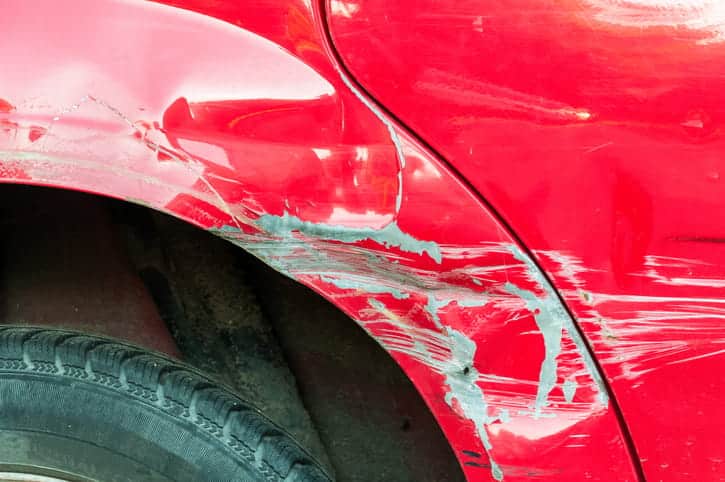
Many of these accidents are the result of negligence. Here’s how to tell who is responsible for a sideswipe accident and what to do if you experience one in Tampa.
What Is a Sideswipe Accident?
The term “sideswipe” refers to a specific type of collision in which one vehicle strikes the side of another car traveling parallel to it. The struck vehicle may be traveling in the same or opposite direction as the striking vehicle when the crash happens.
Sideswipe accidents can occur under several circumstances. The first is when one vehicle leaves its lane of travel and enters another lane occupied by another vehicle. For instance, imagine two vehicles traveling in opposing directions. As they converge, one vehicle leaves its lane and brushes against the other vehicle as it passes. This would be considered a sideswipe accident.
A sideswipe can also occur if one vehicle fails to yield the right of way to another. For example, two cars may approach the same intersection from opposing directions and want to turn. If the drivers ignore right-of-way laws, they could end up striking each other in a sideswipe crash.
What Does It Mean to Get Sideswiped?
To be sideswiped means another vehicle scraped or struck the length of your car’s side rather than hitting you head-on or from behind. The contact runs along a door, fender, or quarter panel. People also write it as “side swipe,” “side-swipe,” or “side swiped,” and all of them describe the same event.
Would you always know if you sideswiped a car? Often, yes. You usually feel a jolt or hear a scrape, and you can see fresh paint transfer or a long scuff down the side. At low speed in a parking lot, light contact can go unnoticed, which is one reason some sideswipe crashes turn into hit-and-runs. If you think you may have clipped another vehicle, stop and check. Leaving the scene of a crash with damage is a crime in Florida.
How To Tell Who Sideswiped Who
When you search “how to tell who sideswiped who,” you might be surprised to find that examining the damage to the vehicles isn’t enough. Instead, a thorough investigation that considers all of the facts about the wreck is the only reliable resource for determining which vehicle struck the other.
For example, one vehicle may have damage on its left side while the other has similar damage on the right. This fact may tell you the angle at which the collision happened, but it doesn’t reveal which vehicle caused the incident.
Determining fault in a sideswipe accident requires examining physical evidence like paint transfer and scrape marks on vehicle damage to identify the striking vehicle. Video footage, eyewitness accounts, and debris patterns reveal if the other driver failed to check blind spots during lane changes.
Police reports and accident reconstruction experts provide objective proof to show who sideswiped who in sideswipe collisions.
How To Tell Who Sideswiped Who By Damage
Damage alone rarely settles a sideswipe case, but the pattern of that damage is strong physical evidence when determining fault. Investigators read the marks on both cars to work out the direction of force and which vehicle drifted across the line. This is the heart of how you tell who sideswiped who by damage. Here is what the marks often tell them:
- Direction of the scratches. Scrapes that run front-to-back on the encroaching car usually point to the vehicle that moved into the other’s lane.
- Rear-quarter panel damage. Damage toward the back corner of a car suggests the other driver was sitting in its blind spot during the lane change.
- Deep grooved gouges. Deep, dug-in grooves often mark the vehicle that drifted in, because it carried the lateral force into the other car.
- Metal buckling. The way the metal folds shows the movement direction of the two vehicles when they collided.
- Tire scuffs. A forceful tire scuff usually means the at-fault driver’s tire made hard contact during the swipe.
The table below sums up how those clues line up with common scenarios.
|
Scenario |
Vehicle Damage Clues |
Likely At-Fault Driver |
|---|---|---|
|
One car drifts into an occupied lane |
Transferred paint on the struck car; deep grooved damage and forward scrapes on the drifting car |
The driver who left their lane |
|
Sideswipe in a blind spot |
Rear-quarter panel damage on the passing car |
The merging or lane-changing driver |
|
Opposite-direction sideswipe |
Mirror-image damage along both driver sides; debris near the center line |
The driver who crossed the center line |
Two outside tools can confirm what the metal suggests. Dashcam footage can decisively prove which driver crossed the lane line, and a vehicle’s event data recorder (the “black box”) can show speed, braking, and steering in the seconds before impact. When physical evidence is read alongside this data, investigators resolve fault in the large majority of sideswipe cases.
Does Paint Transfer Determine Fault?
Paint transfer helps prove fault, but on its own it does not decide it. It is the smear of one car’s paint left on the other at the point of contact, and it confirms two things that help you tell who sideswiped whom: that the vehicles actually touched, and where on each vehicle they touched.
That location is what matters. If your car carries a smear along its rear door and the other car shows matching color on its front bumper, the contact point places the other vehicle behind and to the side of you. That position is consistent with a driver who changed lanes into your car. Adjusters and accident reconstruction experts photograph the transfer, match the colors, and read the contact height to piece together how the sideswipe collision occurred. Paired with video footage, witness statements, and the police report, this evidence becomes part of the proof that shows who sideswiped who.
How Do Insurance Companies Decide Who Is at Fault?
Insurance companies do not simply look at which car is more dented. An adjuster builds a fault picture from several sources, then assigns a percentage of blame to each driver. The adjuster usually reviews:
- The police report and the responding officer’s notes on who caused the crash.
- Recorded statements from both drivers and any witnesses.
- Photos of vehicle damage, paint transfer, debris, and skid marks.
- Any traffic camera footage or dashcam video of the lane change.
- Florida’s traffic laws on lane changes, merging, and right of way.
Because vehicle damage is open to interpretation, adjusters lean on this outside information whenever the marks are unclear. That is also why an insurance company may try to push more blame onto you to reduce what it pays. Strong, well-documented evidence is your best counter to a lowball fault finding.
Who Is at Fault in a Sideswipe Accident?
As is true in any type of accident, the person who is at fault in a sideswipe accident is the one whose negligence led to the accident in the first place. This may not necessarily be the person whose vehicle was damaged the most or the driver of the striking vehicle.
Instead, the driver who committed a careless act that directly caused the accident is the one at fault.
For example, suppose that two cars are traveling in the same direction in different lanes. One driver swerves to avoid hitting a bird in the street. The other driver sees the first driver’s erratic movement and responds by swerving. This causes them to sideswipe the first driver. In this situation, both drivers likely bear some responsibility for the accident.
Common Causes of Sideswipe Collisions
Sideswipe accidents often result from distracted driving, unsafe lane changes, or merging drivers not yielding in traffic. Wet or icy roads, blind spots, and failure to use turn signals during lane changes increase risks in sideswipe collisions. Two vehicles switching lanes without enough room frequently leads to these car accidents.
Sideswipe Accident Fault Indicators
Vehicle damage patterns, such as forward-facing scrape marks on the intruding car, help prove fault in sideswipe accidents by showing the direction of impact. Paint transfer from one vehicle to another at the contact point serves as key physical evidence for insurance claims.
|
Scenario |
Vehicle Damage Clues |
Likely At-Fault Driver |
|---|---|---|
|
One vehicle changes lanes |
Paint transfer on struck car’s side; scrape marks forward on intruding car |
Changing lanes driver |
|
Merging at highway |
Damage on merging vehicle’s front side; debris in merge lane |
Merging driver if no yield |
|
Two cars switch lanes |
Symmetrical damage on both; no clear initiator |
Shared fault based on turn signals, speed |
What to Do After a Sideswipe Accident?
After a sideswipe accident, gather evidence like photos of damage, the accident scene, and police report details right away. Contact an attorney for free consultation to navigate insurance companies that deny fault. Seek medical attention even for minor injuries to build a strong case for compensation.
What to Do If Someone Sideswipes Your Car and Leaves
A driver who sideswipes you and drives off has committed a hit-and-run. You still have options, and the steps you take in the first few minutes matter for both your claim and any police investigation.
- Call 911 and report the crash. A police report creates an official record and starts the search for the other driver.
- Write down anything you saw, including the make, model, color, and partial plate of the fleeing car.
- Photograph the damage to your car, the transferred paint left behind, and the scene from several angles.
- Look around for traffic cameras, doorbell cameras, or business security cameras that may have caught the swipe.
- Ask any witnesses for their names and contact information before they leave.
If the driver is never found, your own uninsured motorist (UM) coverage may pay for your injuries, and collision coverage may pay for the damage to your car. A car accident lawyer can review your policy and handle the claim so you are not fighting the insurance company alone.
Sideswiped by a Truck in Its Blind Spot
Large trucks have wide blind spots, sometimes called “no-zones,” along both sides and especially on the right. If a truck changes lanes or merges while your car sits in that blind spot, it can sideswipe you with serious force. Fault usually falls on the truck driver, because drivers are responsible for confirming a lane is clear before moving into it. Federal rules also require commercial drivers to account for these blind spots.
Truck sideswipe cases carry their own evidence. The truck may have a dashcam, side cameras, or an electronic logging device that recorded the lane change. Acting quickly to preserve that data through your attorney can make the difference in proving the truck driver, and the company behind them, caused the crash.
Sideswipe Accidents in the Same vs. Opposite Direction
The direction the two vehicles were traveling shapes how a sideswipe happens and how serious it is.
- Same-direction sideswipe. Both cars travel the same way, usually in side-by-side lanes. These often happen during lane changes or merges, and the driver who drifted across the lane line is typically at fault.
- Opposite-direction sideswipe. The cars travel toward each other and clip along their sides as they pass. These point to a driver who crossed the center line, and the higher closing speed tends to cause heavier damage and more serious injuries.
In both situations, the same physical evidence applies. The point of contact, the transferred paint, and the direction of the scrapes show which vehicle left its lane. This is usually enough for determining fault in the sideswipe collision.
How Long Do You Have to File a Claim?
In Florida, you generally have two years from the sideswipe accident date to file personal injury claims, per statute of limitations. Delays risk losing evidence like video footage or witness statements crucial for determining accident fault. Consult a personal injury lawyer promptly to pursue compensation for property damage and injuries.
How Much Is a Sideswipe Accident Settlement Worth?
There is no flat figure for a sideswipe settlement. The value depends on how badly you were hurt, your medical bills, your lost wages, the property damage, and how fault is split between the drivers. A minor swipe with no injuries may settle for the cost of repairs, while a crash with serious injuries can be worth far more.
A common follow-up question is how much you actually keep from a settlement. Suppose your case settles for $50,000. Your net amount is not the full $50,000, because several costs come out first. A rough breakdown looks like this:
|
Item |
Typical Deduction |
Running Total |
|---|---|---|
|
Settlement amount |
— |
$50,000 |
|
Attorney fee (often around 33%) |
about $16,500 |
$33,500 |
|
Medical liens and unpaid bills |
varies by case |
reduced further |
|
Case costs (records, experts, filing) |
varies by case |
reduced further |
After fees, liens, and costs, what reaches your pocket from a $50,000 settlement is often in the range of roughly $25,000 to $33,000, depending on your medical bills and case expenses. Florida’s comparative negligence rule can lower it again if you share fault.
Note: These figures are general examples, not a promise of any result, and they are not financial or legal advice. A personal injury lawyer can give you a realistic estimate after reviewing the facts of your case.
Talk to a Personal Injury Lawyer
A car accident attorney helps prove fault in sideswipe accidents by analyzing evidence and negotiating with insurance companies. They maximize fair compensation for medical bills, lost wages, and pain from serious injuries in legal proceedings. Schedule a free consultation with an experienced injury lawyer today for your sideswipe case.
About Jack G. Bernstein Esq.
Personal Injury Lawyer

For more than 40 years, personal injury lawyer Jack G. Bernstein — a member of the Florida State Bar Association, the Hillsborough Bar Association, and the Clearwater Bar Association — has protected the rights of individuals injured by a negligent party.
Mr. Bernstein has the expertise to handle various injury cases, including, but not limited to, car accidents, medical malpractice cases, cruise ship accidents, accidental drownings, wrongful death lawsuits, along with most injury and catastrophic occurrences, and legal malpractice issues.
With a staff of approximately 40 people, including six lawyers and 34 support personnel, Jack Bernstein, Injury Attorneys, handles every type of personal injury and accident case throughout Tampa, Sarasota, St. Petersburg, and Clearwater, FL. Our office has the legal resources to get the justice you deserve and the maximum recovery for your losses. Schedule your free consultation today; we are always here to help.
How To Prove Fault in a Sideswipe Accident
You’ll need to establish liability when you suspect another driver is responsible for your sideswipe crash. Proving that another driver is responsible for your damages is necessary to obtain compensation for your injuries. To accomplish this, you will generally want to take these key steps:
Contact Law Enforcement
First, contact law enforcement to report the accident. Florida law requires that you stop after an accident and contact the police if any vehicle is damaged, someone has been injured, or someone has died. If you are ever in doubt about your legal obligation to call the police, err on the side of caution and do so.
When police respond, they will collect information about you and the other drivers, record statements, and document the accident scene. They will then produce a report containing all of this information that you can obtain a copy of later. The report will also include the officer’s impressions of who was responsible for the wreck.
Document the Accident Scene
The moment after a sideswipe happens, the accident scene begins to change. Cars may move, debris may scatter, and important details that can help tell the story of your accident may become lost. If you are physically able to do so, take photographs or notes of the scene. Pay particular attention to:
- Where the vehicles came to a stop
- The location of damage and any paint transfer on the vehicles
- Debris in the roadway
- Skid marks on the asphalt
- Road signs, signals, and markings, if any
Do not be concerned about taking too many pictures or notes. It’s better to have an abundance of evidence than not enough.
Documenting as many details as possible is important because you cannot rely simply on your own recollections to succeed in your case. Nor does the fact that you were in the vehicle that was struck guarantee that you are entitled to compensation. Instead, the court must consider all the evidence to decide who is at fault.
Note whether any nearby businesses, intersections, or light poles have cameras on them. If your crash was caught on camera, this can provide strong and objective evidence that establishes who is at fault for the accident.
Your claim can succeed when the totality of the evidence shows the other driver’s carelessness caused the crash. The more evidence you have to prove this other driver was negligent, the stronger your injury claim will be.
Gather Statements From Witnesses
Consider speaking with any witnesses who remain on the scene. If they saw the accident occur, their statements can be immensely valuable in making sense of the accident scene. Their observations and recollections can be the key to the success of your claim.
When speaking with witnesses, take down their names, contact information, and a brief description of what they observed. This information can help your car accident lawyer better evaluate which witnesses could be the most helpful for your case and easily get in touch with them when needed.
Be cautious about engaging the other drivers in conversation, though. Make sure to avoid saying anything that could imply you are admitting fault. For example, apologizing for not watching where you were going could be construed as admitting fault.
Understand Contributory Negligence in Florida
You may be discouraged from taking these steps following a sideswipe accident if you believe you were partially responsible for it. For example, you might have made a sudden movement within your lane that caused the driver in the next lane to react and accidentally sideswipe you.
When analyzing any sideswipe accident, the judge or jury will assign each person involved a percentage of fault for causing the accident. These percentages can range from zero to 100 and will cumulatively add up to 100%. The higher the percentage, the greater the role that the person’s carelessness played in causing the accident.
In Florida, injury victims can pursue compensation for their losses as long as their level of fault is 50% or less. In this case, any fault attributable to you will reduce the amount of compensation you receive. For instance, if your severe injuries require $50,000 in compensation but are 20% at fault, you would receive $40,000.
If your negligence is the primary cause of the sideswipe accident, you likely would not be entitled to recover any compensation.
Get Assistance From an Experienced Tampa Car Accident Lawyer

Knowing whose carelessness caused a sideswipe accident is critical if you or a loved one is seriously hurt in the resulting crash. When you suffer a catastrophic severe injury like the loss of a limb or permanent damage to a body part, you may have a right to pursue damages beyond those you receive through your personal injury protection (PIP) policy. In almost every case, it is wise to get a lawyer.
Having a skilled Tampa car accident lawyer on your side can make all the difference in the success of your claim. Let the seasoned team at Jack Bernstein, Injury Attorneys, help you with your case.
We can determine the fault in your accident and call in accident reconstruction specialists as necessary. We handle your claim every step of the way so you can focus on recovering.
Were you injured in a car accident? Contact Jack Bernstein, Injury Attorneys, now.
Frequently Asked Questions About Sideswipe Accidents
Jack Bernstein, Injury Attorneys
Free Case Evaluation
No Fees Unless We Win
No upfront fees, no risk, and no out of pocket cost to you or your family.
Entirely confidential – we respect your privacy, consultations are privileged.