

 CALL NOW
How you collect evidence after a car accident can mean the difference between winning your case and no compensation at all.
Evidence collection is a critical part of not only proving that you deserve compensation but proving how much you deserve for your case.
When you’re hurt in a car accident, there are important things that you, as the victim, can do to gather the evidence in your case. Our car accident lawyers in Tampa explain how to collect evidence after a collision.
How to Collect Evidence After a Car Accident
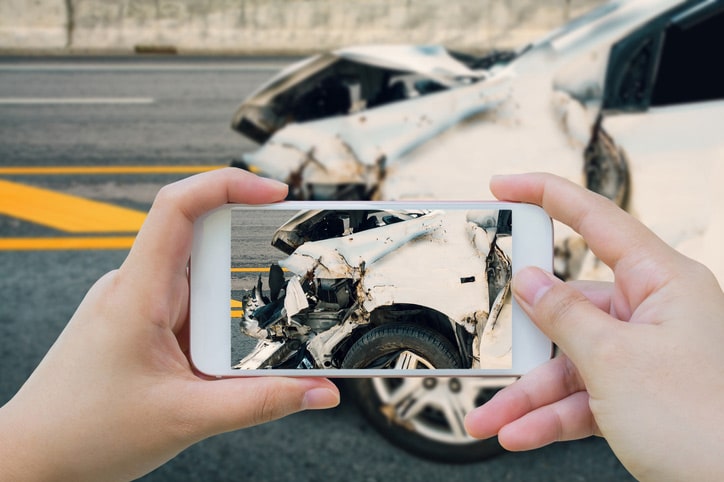
To collect evidence after a car accident, observe the scene, talk to witnesses, and take photos. You should take pictures of the cars, including damage, skid marks, the other party’s driver’s license, and their license plate.
Write down the driver’s phone number and license information. Get names, addresses, and phone numbers for all witnesses. How to collect evidence after a car accident includes gathering evidence immediately and in the days and weeks that follow the accident.
If you have been injured car accident, contact Jack Bernstein, Injury Attorneys now.
Significance Of Car Accident Evidence
Car accident evidence is critical to receiving compensation for your car accident. Even if the facts are 100% on your side, and you know what happened, you still have to have the evidence to convince others.
Evidence is facts, documentation, and other proof that your side of the case is true. Gathering car accident evidence not only ensures that you win your case, but that you resolve your case in the fastest and best way possible.
Accident Evidence Definition
The definition of accident evidence is any fact or piece of information that makes any relevant issue more or less likely. Evidence can be witness testimony, photographs, physical items, or documentation. Anything that makes your side of the case more likely is part of your accident evidence. If an object, someone’s testimony, or a piece of information helps you prove your case, then it meets the definition of accident evidence.
Evidence Required for a Successful Car Accident Claim
To build a successful car accident claim, you must gather strong evidence that establishes liability and proves the full extent of damages. Insurance companies and courts rely on documentation such as police reports, medical records, witness statements, and property damage receipts to evaluate fault and compensation. Collecting evidence at the accident scene—like photos of vehicles, skid marks, and road conditions—provides immediate proof of driver negligence.
Surveillance footage, dashcam video, and electronic crash data can serve as compelling evidence when preserved quickly. Financial documents, including pay stubs and employer letters, demonstrate lost wages and the broader financial impact of injuries. The right evidence not only strengthens your claim but also accelerates negotiations with insurance companies and supports fair compensation in a personal injury lawsuit.
Gathering Evidence After a Car Accident
Gathering evidence after a car accident begins immediately. Of course, your first step should be making sure that everyone is okay. If anyone needs medical attention, that should be your primary focus. After that, it’s time to start gathering evidence.
Police Report: Your Official Record of the Crash
Always call 911 to file a police report. This official record documents the crash scene, officer observations, and fault assessment, making it a critical piece of supporting evidence.
Medical Records and Bills: Proving the Extent of Injuries
Comprehensive medical records – from ER visits to follow‑ups – help establish the financial impact of injuries. Include medical bills, lab tests, and imaging costs to strengthen your car accident claim.
Witness Statements and Surveillance Footage
Neutral witness statements and surveillance footage provide compelling evidence. Attorneys can send preservation letters to businesses to secure video before it’s overwritten, ensuring fault is clearly established.
About Jack G. Bernstein Esq.
Personal Injury Lawyer

For more than 40 years, personal injury lawyer Jack G. Bernstein — a member of the Florida State Bar Association, the Hillsborough Bar Association, and the Clearwater Bar Association — has protected the rights of individuals injured by a negligent party.
Mr. Bernstein has the expertise to handle various injury cases, including, but not limited to, car accidents, medical malpractice cases, cruise ship accidents, accidental drownings, wrongful death lawsuits, along with most injury and catastrophic occurrences, and legal malpractice issues.
With a staff of approximately 40 people, including six lawyers and 34 support personnel, Jack Bernstein, Injury Attorneys, handles every type of personal injury and accident case throughout Tampa, Sarasota, St. Petersburg, and Clearwater, FL. Our office has the legal resources to get the justice you deserve and the maximum recovery for your losses. Schedule your free consultation today; we are always here to help.
At the Scene of the Accident
At the accident scene itself, your job is to get the evidence that is going to be impossible to get later. Here is the evidence to gather at the scene of the accident:
- Photos of where the vehicles come to rest
- Photos of location and damage to the vehicles
- Photos of skid marks; visual observation of skid marks
- Witness information – get their names, addresses and phone numbers
- Driver’s license name and number for the other driver (take a photo of their license if you can)
- Insurance information for the other driver
- License plate information for the other driver (take a picture of it if you can)
- Police officer names, departments, and badges
By getting the basic information, you get what you need to file the claim and build the evidence later. At this stage, don’t worry about what evidence you’ll ultimately use if your case goes to trial. For now, just gather all of the information so that you can follow up on it later.
After You Leave the Scene of the Accident
To collect evidence after a car accident, you need to continue your efforts once you leave the scene of the accident. After you leave the scene, the more detailed, technical work begins to prove your case. Here is how to collect evidence after you leave the scene of a car accident:
- Follow up with witnesses. Ask them for what they saw and heard. Ask follow up questions to understand what each witness observed before, during, and after the car accident.
- Continue to receive medical treatment. In the process, gather expert evidence of the full extent of your physical injuries and medical damages.
- Gather records of your employment. If you’re unable to work for any period of time after the accident, you need to know what you were making, including bonuses and tips.
- Determine what experts you need and secure them. You may need an expert to explain how the accident occurred. You may need an expert to explain how your medical injuries impact your ability to work and live your life in the future. Gathering evidence means figuring out what experts you need, securing them to investigate the case and testify on your behalf.
- Even your own testimony is critical after the accident. You can keep a journal of your pain and limitations. You can keep records of costs associated with your injuries, care and treatment, and any other expenses related to the accident.
At all times, be sure to store your evidence in a safe and secure place. A box, folder, or section of a filing cabinet can meet this need. You can take photos of records and documents with your phone to make backups or scan them using a scanner. Have one place where you keep things related to the case.
Make sure that it’s in a place where it won’t get damaged. By keeping everything in one, safe place, you can save the stress of worrying about misplaced documents or spending time trying to remember where things are. When you work with an attorney, they have a secure way to store records electronically and at their office.
Financial Documents and Lost Wages
Keep pay stubs, employer letters, and records of lost sick days. These financial documents prove the economic impact of your injuries and support compensation for missed work.
Expert Witnesses and Accident Reconstruction
Expert witnesses validate claims by reconstructing actual accident scene or explaining medical limitations. Their impartial view provides strong evidence in complex car accident cases.
Preserving Evidence for Court and Insurance Companies
Store all documents, photos, and electronic data securely. Evidence preservation ensures admissibility in court and credibility during negotiations with insurance companies.
Your Best Asset: A Car Accident Attorney
A skilled car accident attorney is your best asset. They know how to collect, preserve, and present strong evidence, and can offer a free consultation to guide your claim.
Preparing Evidence for Trial After a Car Accident
Once you gather the evidence, keep in mind that rules of evidence apply at trial. If your case goes to a formal trial in a courtroom, there are rules that determine how you can present evidence. There are rules for what’s admissible and what isn’t, and for what questions you have to ask ahead of time to admit the evidence.
However, those rules of evidence don’t apply when you’re negotiating with the insurance company. Your experienced attorneys for car accidents can help you gather evidence and use it appropriately to pursue your case.
Contact Our Tampa Car Accident Lawyers If You Need Help Collecting Evidence After Your Crash
Our attorneys are trained experts for gathering evidence after a car accident. At Jack Bernstein, Injury Attorneys, we know what evidence it takes to prove your injuries and losses. We also know what steps to take should your case go to trial.
We’re taking new cases. Don’t fight alone. Call us today. There is no fee unless you win.
Were you injured in a car accident? Contact Jack Bernstein, Injury Attorneys now.
Frequently Asked Questions (FAQs)
Jack Bernstein, Injury Attorneys
Free Case Evaluation
No Fees Unless We Win
No upfront fees, no risk, and no out of pocket cost to you or your family.
Entirely confidential – we respect your privacy, consultations are privileged.