

 CALL NOW
Tampa Head-On Collision Accident Lawyer
No Fees Unless We Win
A head on collision is among the most destructive types of car accidents on Tampa roads. These crashes concentrate the full force of two vehicles traveling in opposite directions into a single moment of impact, and the results are often life-altering. Drivers, passengers, pedestrians, and families across Hillsborough County face catastrophic injuries, mounting medical bills, and financial uncertainty in the aftermath.
Our personal injury attorneys bring decades of trial experience to head-on collision cases. We have handled high-impact crashes involving traumatic brain injuries, spinal cord damage, and wrongful death, and we work on a contingency fee basis. You pay nothing unless we recover compensation for you.
Call us today or schedule a free consultation to discuss your head-on collision case. Early legal representation can make the difference between a lowball insurance offer and the fair compensation you deserve.
If you need an injury attorney in Tampa, call Jack Bernstein, Injury Attorneys for results you can trust.
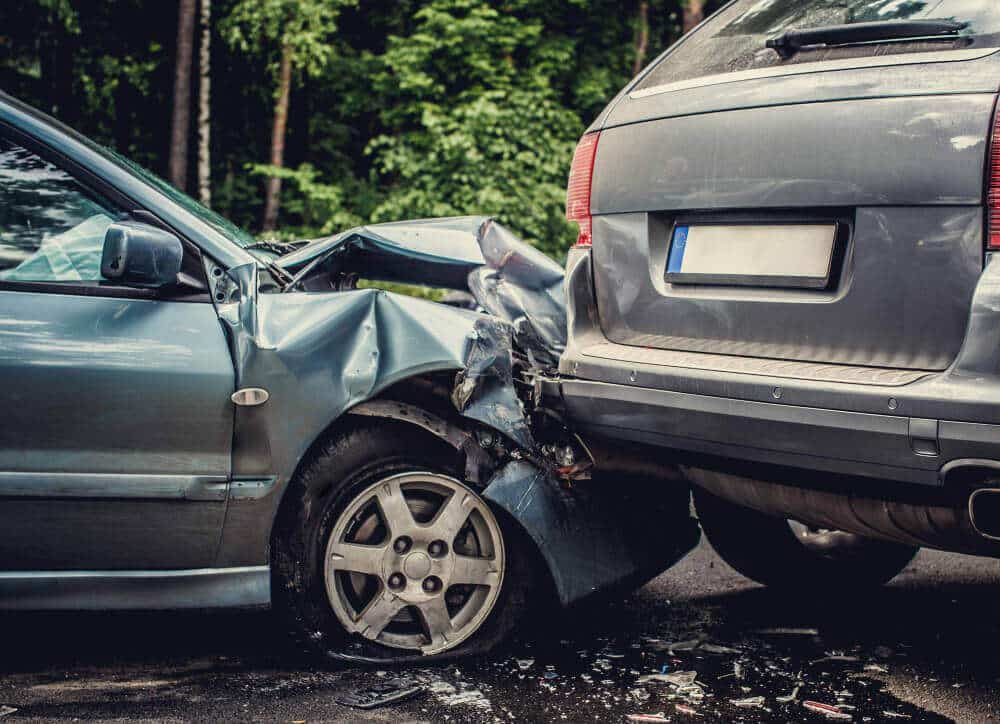
Why head-on collisions are especially dangerous
When two vehicles collide front-to-front, the combined speed of both vehicles determines the force of impact. A crash between two cars each traveling at 45 mph produces the same destructive energy as hitting a wall at 90 mph. That is why head-on collisions account for a disproportionate share of traffic fatalities, even though they represent a small percentage of all crashes.
According to the NHTSA 2023 Traffic Crash Summary, there were 40,901 people killed and roughly 2.44 million people injured in traffic crashes that year. Head-on collisions produce some of the worst outcomes within that data, frequently resulting in traumatic brain injuries, spinal cord damage, and internal organ trauma.
The CDC reports that motor vehicle crashes remain the leading cause of TBI-related death for people between ages 5 and 24, with approximately 68,663 TBI-related deaths nationally in 2023. The National Spinal Cord Injury Statistical Center notes roughly 18,000 new traumatic spinal cord injuries each year, with car accidents as a leading cause. These injuries frequently require lifelong care and generate wrongful death claims when victims do not survive.
Common contributing factors include speeding, impaired driving, and drifting into oncoming traffic lanes due to drowsiness or distraction.
Common causes of head-on collisions in Tampa
Head-on crashes in Tampa and Hillsborough County stem from several recurring driver behaviors and environmental conditions. Understanding these causes strengthens your car accident claim by identifying who bears responsibility.
Speeding and reckless driving
When a driver is speeding, they have less time to react and less room to correct their trajectory. The NHTSA reports that 11,775 people died in speeding-related crashes in 2023, accounting for 29% of all traffic fatalities. Eighty-seven percent of those deaths occurred on non-interstate roadways, the same type of surface streets that run through Tampa neighborhoods. Higher closing speeds between two oncoming vehicles multiply the impact force and sharply increase the severity of auto accident injuries.
Impairment and distracted driving
Drunk driving kills roughly one person every 44 minutes in the United States. In 2023, 12,429 people were killed in alcohol-impaired crashes, and 67% of those involved drivers with a BAC nearly double the legal limit. Distracted driving contributed to an estimated 3,275 deaths and 222,396 injuries the same year, with drivers aged 15 to 34 making up a disproportionate share. Both behaviors cause drivers to cross center lines directly into oncoming traffic.
Lane-departure and run-off-road events
Drowsy driving causes sudden lane departures when a fatigued driver drifts across the center line. Swerving to avoid road debris or animals can also send a vehicle into oncoming traffic. These events happen quickly, often on two-lane roads where there is no physical barrier separating directions of travel.
Road design, construction, and poor lighting
Narrow shoulders, absent median barriers, faded lane markings, and poorly marked construction zones contribute to head-on crashes across Hillsborough County. When a government agency fails to maintain safe roadway conditions, the responsible entity may share liability for the resulting collision.
Vehicle failures and defects
Brake failure, sudden tire blowouts, and steering defects can cause a driver to lose control and veer into oncoming lanes. In these situations, a product liability claim may apply against the vehicle manufacturer, parts supplier, or maintenance provider.
Typical injuries from head-on collisions and their consequences
The force involved in a head-on collision produces some of the most severe injuries seen in any type of automobile accident. These are not minor fender-bender injuries. They are the kind that change the course of a person’s life.
Common injuries include:
- Traumatic brain injuries (TBI) ranging from concussions to permanent cognitive impairment. The CDC recorded approximately 190 TBI-related deaths per day in 2023.
- Spinal cord injuries that can result in partial or total paralysis, with average indirect costs of $92,578 per year per person according to the NSCISC
- Multiple bone fractures, including compound fractures to the legs, pelvis, ribs, and facial bones
- Internal organ damage, including lacerations to the liver, spleen, and kidneys from blunt-force trauma
- Severe soft-tissue injuries, including torn ligaments, herniated discs, and crush injuries
- Traumatic amputations caused by vehicle intrusion during impact
The long-term consequences extend far beyond the emergency room. Accident victims often require months or years of rehabilitation, ongoing medical care, adaptive equipment, and in-home assistance. Many cannot return to their previous occupation, resulting in diminished earning capacity. Emotional trauma, including PTSD and depression, frequently accompanies these physical injuries. For families who lose a loved one, wrongful death claims address funeral costs, loss of financial support, and the deep personal loss.
Who may be liable after a head-on crash
Identifying every responsible party is a critical step in maximizing your financial recovery. Head-on collision cases often involve multiple defendants, each contributing to the conditions that caused the crash.
|
Potential defendant |
Basis for liability |
|
Other driver |
Negligence such as speeding, impairment, distraction, or crossing the center line |
|
Vehicle owner |
Negligent entrustment if the owner allowed an unfit driver to operate their vehicle |
|
Employer |
Vicarious liability when the at fault driver was operating a commercial vehicle during work duties |
|
Vehicle manufacturer |
Product liability for defective brakes, steering systems, tires, or other components |
|
Government agency |
Failure to maintain safe road design, signage, lighting, or median barriers |
|
Maintenance contractors |
Negligent vehicle repair, tire installation, or brake servicing |
Florida now operates under a modified comparative negligence standard following Florida HB 837 (signed March 24, 2023). If you are found more than 50% at fault for the crash, you cannot recover any damages. If your share of fault is 50% or less, your compensation is reduced by your percentage of responsibility. This makes it especially important to work with an experienced car accident lawyer who can gather evidence proving the other party’s negligence.
Claims against government entities require special procedures, including a notice of claim requirement and potential damage caps. The NTSB’s Special Investigation Report found that approximately 82% of wrong-way crash events involve front-to-front collisions, often at highway speeds, making government road-design failures a viable basis for liability in many head-on cases.
How a lawyer investigates a head-on collision case
Building a strong Tampa car accident case after a head-on collision requires immediate, methodical evidence collection and expert analysis. The legal process starts well before any lawsuit is filed.
Early evidence preservation:
- Scene photographs documenting vehicle positions, road conditions, skid marks, and debris patterns
- Police reports and responding officer observations
- Surveillance camera and dashcam footage from nearby businesses and vehicles
- Event data recorder (EDR) or “black box” data showing vehicle speed, braking, and steering inputs before impact
Expert analysis:
- Accident reconstructionists who use physical evidence and data from systems like NHTSA’s Fatality Analysis Reporting System (FARS) to determine exactly how the crash occurred
- Biomechanical experts who connect the crash forces to specific injuries
- Medical specialists who document the full scope of injuries and project future care needs
- Engineers who evaluate vehicle defects or roadway design failures
Our legal team’s strategy focuses on proving each element of negligence (duty, breach, causation, and damages), calculating the full extent of future losses, and preparing your case to withstand insurer pushback. If the insurance company refuses to offer fair compensation, we are prepared to take your case to trial.
Steps to take immediately after a head-on collision
The actions you take in the hours and days after a serious accident directly affect the strength of your personal injury claim. Follow these steps to protect your health and your legal rights.
Safety and medical care
Call 911 immediately. Seek medical attention even if you feel fine, because internal injuries from head-on collisions often produce delayed symptoms. A prompt medical evaluation creates documentation linking your injuries to the crash. Under Florida law, you must seek treatment within 14 days to protect your personal injury protection (PIP) benefits.
Preserve evidence at the scene
If you are physically able, take photos of all vehicles involved, the surrounding road conditions, traffic signals, and any visible injuries. Note weather and lighting conditions. Collect contact and insurance information from the other driver. Get names and phone numbers from witnesses. Record the positions of all vehicles before they are moved.
Report and document medical treatment
Keep thorough records of every medical appointment, prescription, therapy session, and follow-up visit. Save all receipts for medical expenses, including transportation costs for medical care. Complete medical records are among the most powerful pieces of evidence in a personal injury lawsuit.
Notify your insurer carefully
Report the accident to your insurance company, but stick to basic facts. Do not admit fault, speculate about the cause, or provide a recorded statement without first speaking to an attorney. Insurance adjusters look for statements they can use to reduce or deny your claim.
Contact an experienced head-on collision attorney
The sooner you have legal representation, the better positioned you are to preserve evidence, handle insurance negotiations, and meet filing deadlines. Contact our law firm for a free consultation.
What compensation you can pursue after a head-on collision
Motor vehicle crashes cost the U.S. economy nearly $1.4 trillion annually in total societal harm, according to NHTSA. For individual accident victims, the financial toll of a head-on collision can be equally staggering. Florida personal injury law allows you to pursue both economic and non-economic damages when another party’s negligence caused your injuries.
Economic damages
These are the measurable, documented financial losses you have already incurred and will continue to face:
- Past and future medical bills, including emergency care, surgeries, hospitalization, and prescription medications
- Rehabilitation costs such as physical therapy, occupational therapy, and cognitive therapy for brain injuries
- Ongoing medical care for permanent conditions, including adaptive equipment and home modifications
- Lost wages from time missed at work during recovery
- Diminished earning capacity when your injuries prevent you from returning to your previous occupation
- Property damage to your vehicle and personal belongings
Non-economic damages
Florida law also compensates you for losses that do not carry a specific dollar amount but deeply affect your daily life:
- Pain and suffering caused by both the initial trauma and ongoing physical limitations
- Emotional distress, including anxiety, depression, PTSD, and sleep disorders
- Loss of consortium, which compensates a spouse for the loss of companionship and support
- Diminished quality of life when permanent injuries limit activities you previously enjoyed
Wrongful death remedies
When a head-on collision proves fatal, surviving family members can file a wrongful death claim to recover funeral and burial expenses, loss of financial support the deceased would have provided, loss of parental guidance for minor children, and damages through survival actions on behalf of the estate.
Florida-specific rules and deadlines for head-on collision claims
Florida has several laws and procedural requirements that directly affect how you file and pursue a head-on collision claim. Missing a deadline or failing to follow the correct procedure can eliminate your right to recover damages entirely.
Statute of limitations: Under Florida HB 837, the statute of limitations for most personal injury claims filed after March 24, 2023 is two years from the date of the accident. If you miss this deadline, the court will almost certainly dismiss your case. Wrongful death and medical malpractice timelines have separate rules.
No-fault PIP requirements: Florida remains a no-fault PIP state. Every driver must carry personal injury protection coverage providing up to $10,000 for reasonable medical expenses after a crash. You must seek medical attention within 14 days of the accident to protect these benefits. To pursue additional compensation beyond PIP through a personal injury lawsuit, your injuries must meet the “serious injury” threshold under Florida Statutes § 627.737. Head-on collision injuries almost always meet this standard.
Modified comparative fault: Florida’s modified comparative negligence rule means that if you are found more than 50% at fault, you cannot recover any damages. If you are 50% or less at fault, your recovery is reduced proportionally. Medical malpractice claims remain under the pure comparative fault standard.
Government defendant procedures: If a government entity is responsible, whether through poor road design, missing signage, or failure to maintain barriers, you must follow specific notice of claim requirements before filing suit. Damage caps and shorter filing windows may apply. An experienced attorney can make sure these procedural steps are handled correctly.
About Jack G. Bernstein Esq.
Personal Injury Lawyer

For more than 40 years, personal injury lawyer Jack G. Bernstein — a member of the Florida State Bar Association, the Hillsborough Bar Association, and the Clearwater Bar Association — has protected the rights of individuals injured by a negligent party.
Mr. Bernstein has the expertise to handle various injury cases, including, but not limited to, car accidents, medical malpractice cases, cruise ship accidents, accidental drownings, wrongful death lawsuits, along with most injury and catastrophic occurrences, and legal malpractice issues.
With a staff of approximately 40 people, including six lawyers and 34 support personnel, Jack Bernstein, Injury Attorneys, handles every type of personal injury and accident case throughout Tampa, Sarasota, St. Petersburg, and Clearwater, FL. Our office has the legal resources to get the justice you deserve and the maximum recovery for your losses. Schedule your free consultation today; we are always here to help.
Frequently asked questions
Testimonials
Read what our clients have to say.