

Tampa Rear-End Collisions Lawyer
No Fees Unless We Win
Rear-end collisions are the single most common crash type on American roads, making up roughly 28.4 percent of all reported crashes according to NHTSA’s 2024 crash type analysis. If you were rear-ended in a Tampa car accident, you already know how quickly medical bills, lost wages, and insurance disputes pile up.
Our Tampa rear-end collisions lawyer fights for victims of both low-speed fender benders and high-speed rear-end crashes across Tampa Bay. We work on a contingency-fee basis, so you pay nothing unless we recover compensation for you. Whether your rear-end collision happened at a stoplight on Dale Mabry or on I-275 during rush hour, our Tampa car accident attorney team is ready to help. Call today for a free case evaluation.
If you need an injury attorney in Tampa, call Jack Bernstein, Injury Attorneys for results you can trust.
What happens in a Tampa rear-end collision?
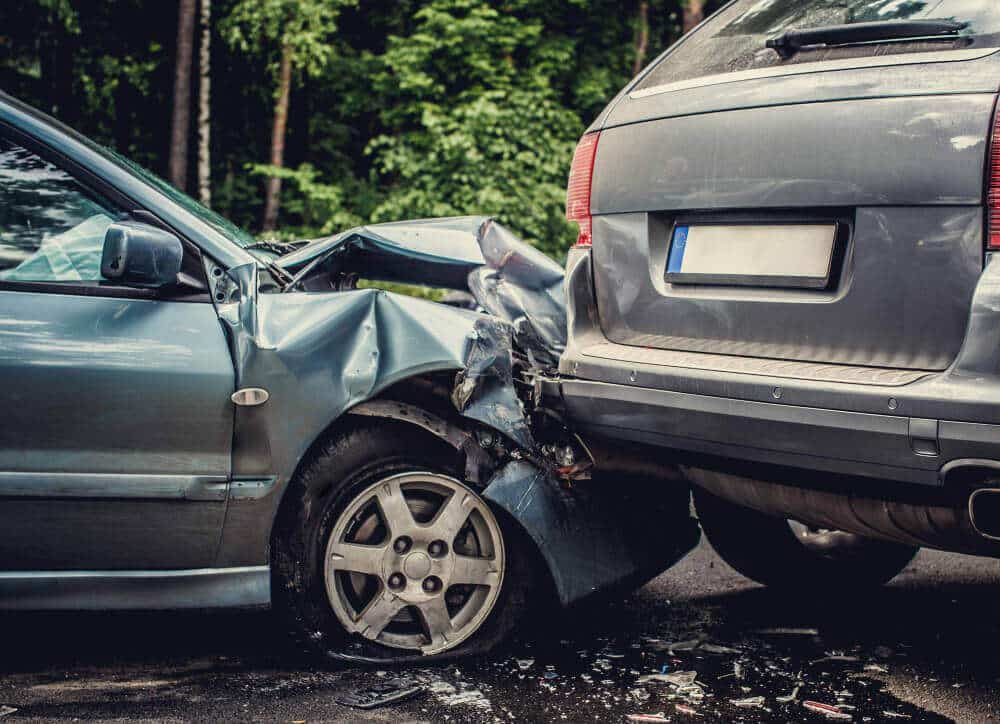
A rear-end collision occurs when the rear vehicle strikes the back of the front vehicle. These crashes happen at traffic lights, stop signs, highway merge points, and anywhere traffic slows without warning. The front driver is often stopped or decelerating when the rear driver fails to brake in time.
Tampa Bay’s roads carry some of Florida’s heaviest daily traffic, and rear-end accidents are a constant problem on corridors like I-4, I-275, and US-19. The FLHSMV 2023 Traffic Crash Facts report recorded 395,175 total crashes across Florida, with over 165,000 resulting in injuries. Many of those were rear-end crashes involving two or more vehicles on congested Tampa-area highways.
The serious consequences of these collisions go beyond vehicle damage. Accident victims regularly suffer whiplash, back injuries, and traumatic brain injuries, even when the rear vehicle was traveling at moderate speed. The injured party may face weeks or months of medical treatment before knowing the full extent of the harm.
Common causes of rear-end collisions in Tampa
Rear-end crashes happen for a handful of recurring reasons. Understanding what caused your collision matters because proving fault directly affects your ability to recover damages under Florida law. Below are the most frequent contributing factors in Tampa rear-end accidents.
Distracted driving and using a phone
When a driver looks at a phone, adjusts a GPS, or turns to deal with passengers, their reaction time drops to near zero. NHTSA data shows that distracted driving killed 3,208 people across the US in 2024, and rear-end crashes are among the most common results of that inattention. A split second of distraction on a busy Tampa road is enough to cause a serious collision.
Speeding and tailgating
Speed and following distance are directly linked. NHTSA crash data shows that tailgating is a contributing factor in roughly 23 percent of rear-end crashes reported by police. On Tampa’s congested interstates and surface streets, a rear driver who fails to maintain a safe distance has very little time to stop when traffic suddenly slows.
Impaired or drowsy driving
Alcohol, drugs, and fatigue all slow the reflexes needed to brake in time. Hillsborough County, home to Tampa, consistently ranks among Florida’s highest-volume counties for impaired-driving crashes, according to FLHSMV data. A rear driver who is under the influence has almost no chance of stopping safely when the car ahead brakes suddenly.
Weather and road conditions
Tampa’s afternoon thunderstorms, fog, and construction zones create sudden stop-and-go traffic that catches rear drivers off guard. Florida averaged more than 1,000 crashes per day in 2023, with environmental conditions routinely cited as contributing factors in police crash reports.
Who is at fault in a Tampa rear-end accident?
Fault determines who pays. In most Tampa rear-end collisions, the rear driver is presumed responsible, but that presumption is not absolute. Insurance companies and at-fault drivers regularly try to shift blame, and complex liability situations arise more often than you might expect.
Rebuttable presumption against the rear driver
Florida law presumes the rear driver is at fault for a rear-end collision. The logic is straightforward: every driver has a legal duty to maintain a safe following distance and stop in time for the vehicle ahead. When a rear-end collision occurs, that duty was not met. However, this presumption is rebuttable, meaning the rear driver can present evidence showing that something else caused or contributed to the crash.
When the front driver shares fault
The front driver is not always blameless. Sudden, unsafe lane changes, brake-checking, reversing unexpectedly, or driving with broken brake lights can shift some or all fault to the front driver. If the other driver’s reckless behavior contributed to the crash, your Tampa rear-end collisions lawyer can use that evidence to strengthen your claim and protect your right to fair compensation.
Florida’s comparative negligence system
Florida now operates under a modified comparative negligence system following HB 837, signed into law on March 24, 2023. Under this rule, if you are found more than 50 percent at fault for a crash, you are barred from recovering any damages. If your share of fault is 50 percent or less, your compensation is reduced by your percentage of fault.
Proving fault with evidence
Police reports, photos from the scene, witness statements, and dash-cam or traffic-camera footage are all forms of evidence used to establish who caused a rear-end collision. Your attorney will gather and preserve this material to build the strongest possible case.
What to do after a Tampa rear-end collision
The steps you take right after a rear-end collision directly affect your ability to recover damages. Insurance adjusters will look for any reason to reduce or deny your claim, so protecting your rights starts at the scene.
Check for injuries and seek medical care
Seek medical attention right away, even if you feel fine at the scene. Injuries like whiplash, neck injuries, and back injuries often take hours or days to produce symptoms. Florida law requires you to seek medical care within 14 days of a crash to preserve your Personal Injury Protection benefits under Florida Statute § 627.736. Missing that window means losing up to $10,000 in mandatory PIP coverage. Get checked by a doctor the same day if possible, and keep every medical record.
Call the police and get an accident report
Call 911 immediately. A police report documents the vehicles involved, the location, road conditions, and the officer’s initial assessment of fault. That accident report becomes a foundational piece of evidence for your insurance claim and any personal injury lawsuit that follows.
Preserve evidence and gather information
Take photos of the scene, both vehicles, skid marks, traffic signals, and any visible injuries. Collect the other driver’s contact and insurance information, along with names and phone numbers of any witnesses. Dash-cam footage and traffic-camera recordings can also serve as evidence, so note any cameras in the area. Your legal team can request that footage before it is deleted.
Contact a Tampa rear-end collisions lawyer
Reach out to a Tampa rear-end collisions lawyer as soon as possible. Insurance companies will move fast to settle for less than your claim is worth, and anything you say to an adjuster can be used against you. An experienced personal injury lawyer handles all communication with the insurance company, preserves evidence, and protects your personal injury claim from day one.
What compensation can you recover after a rear-end collision?
The financial toll of a rear-end collision can be enormous. NHTSA estimated that 2.44 million people were injured in traffic crashes in 2023 nationwide, with medical bills, lost wages, and rehabilitation costs adding up fast. A Tampa rear-end collisions lawyer can help you pursue every dollar of compensation you are owed.
The type and amount of compensation depend on the severity of your injuries, the impact on your daily life, and whether the at-fault driver’s negligence rises to a level that supports additional claims.
Types of compensation in Tampa rear-end collision cases
|
Category |
What it covers |
Examples |
|
Economic damages |
Measurable financial losses tied to the crash |
Medical bills, hospital stays, surgery, physical therapy, prescriptions, lost wages, future lost income, diminished earning capacity |
|
Non-economic damages |
Losses that do not have a fixed dollar amount |
Pain and suffering, physical pain, emotional distress, loss of enjoyment of life, impact on relationships |
|
Wrongful death damages |
Compensation available to surviving family members when a rear-end collision is fatal |
Funeral costs, loss of companionship, mental anguish, lost financial support |
Economic damages: medical bills and lost income
Rear-end crash victims can pursue compensation for every out-of-pocket cost caused by the collision. That includes emergency room visits, imaging and diagnostic tests, surgery, physical therapy, prescription medications, and ongoing rehabilitation. If your injuries force you to miss work, you can claim lost wages for that period. If the injuries limit your ability to earn what you earned before, diminished earning capacity becomes part of the claim as well. Your medical records and employment documentation form the backbone of this portion of the case. A Tampa car accident attorney will work with medical and financial professionals to calculate the full value of your economic losses.
Non-economic damages and pain and suffering
Not every loss shows up on a bill. Pain and suffering, physical pain that persists long after the crash, emotional distress, anxiety about driving, and a diminished quality of life all qualify as non-economic damages under Florida law. These damages are harder to quantify, but they are just as real. Juries and insurance adjusters look at the severity of injuries, the length of recovery, and the overall impact on daily life when assigning a value. Your lawyer’s job is to document that impact so you receive fair compensation rather than a lowball settlement offer.
Wrongful death and loss of a loved one
Not all rear-end collisions are survivable. NHTSA data shows roughly 2,500 people die in rear-end crashes across the US each year. If a loved one was killed in a Tampa rear-end collision, surviving family members may be entitled to file a wrongful death claim for funeral costs, loss of companionship, mental anguish, and lost financial support. Florida’s personal injury laws set specific rules about who can bring a wrongful death action and what damages are available.
Common injuries from Tampa rear-end collisions
Rear-end crashes produce a specific pattern of injuries because the occupants of the front vehicle are jolted forward and then snapped backward. Even what appears to be a minor collision can cause injuries that worsen over time. Roughly 3 million new whiplash cases are diagnosed in the US every year according to the Insurance Research Council, and the vast majority come from rear-end collisions.
Injuries frequently seen in rear-end collision cases
- Whiplash and neck injuries: The most common rear-end collision injury. Symptoms may not appear for 24 to 72 hours after the crash.
- Back injuries: Herniated discs, muscle strains, and vertebral fractures caused by the sudden force of impact.
- Traumatic brain injury: The head striking the steering wheel, headrest, or window can cause concussions and more severe brain trauma.
- Broken bones: Wrists, ribs, and facial bones are vulnerable when the body is thrown forward on impact.
- Head injuries: Cuts, contusions, and skull fractures from contact with the vehicle interior.
- Spinal cord injuries: In severe cases, a rear-end collision can cause partial or complete paralysis.
If you are dealing with any of these injuries after a rear-end crash, seek medical treatment immediately and contact our law firm to discuss your options.
Statute of limitations for Tampa rear-end collision cases
Under Florida Statutes § 95.11, as amended by HB 837, you now have only two years from the date of injury to file a personal injury lawsuit. That deadline was four years before the law changed in March 2023. Two years may feel like a long time, but building a strong case takes months of medical documentation, accident reconstruction, and negotiation. Contact a Tampa rear-end collisions lawyer early so your legal team has enough time to do the job right.
Florida’s no-fault insurance system and rear-end collisions
Florida is a no-fault insurance state. After a rear-end collision, your own Personal Injury Protection policy covers up to $10,000 in medical expenses and lost wages, regardless of who caused the crash. PIP covers 80 percent of medical bills and 60 percent of lost income, up to that $10,000 cap.
Those limits run out fast after a serious rear-end crash. When PIP benefits are exhausted, or when your injuries meet Florida’s threshold for a personal injury lawsuit (permanent injury, significant scarring, or loss of a bodily function), you can step outside the no-fault system and file a claim directly against the at-fault driver. Your health insurance may cover additional medical costs in the meantime, but recovering full financial compensation usually requires a personal injury claim or lawsuit against the other driver’s liability insurance.
Why hire a Tampa rear-end collisions lawyer for your case?
Insurance companies have adjusters, attorneys, and a financial incentive to settle your claim for as little as possible. Going up against them alone puts you at a disadvantage. Here is what our law firm does for rear-end collision clients:
- Investigate the crash and gather police reports, witness statements, photos, and video footage.
- Handle all communication with the insurance company so you do not accidentally say something that hurts your claim.
- Work with medical professionals to document the full extent of your injuries and future treatment needs.
- Calculate every category of damages, including lost wages, medical expenses, pain and suffering, and property damage.
- Negotiate aggressively for a fair settlement, and take the case to trial if the insurance company refuses to pay what you deserve.
- Operate on a contingency-fee basis: you pay nothing unless we recover money for you.
If your rear-end collision involved a truck, motorcycle, or rideshare vehicle, additional insurance policies and liability rules may apply. Our legal team handles those layers of complexity so you can focus on recovery.
About Jack G. Bernstein Esq.
Personal Injury Lawyer

For more than 40 years, personal injury lawyer Jack G. Bernstein — a member of the Florida State Bar Association, the Hillsborough Bar Association, and the Clearwater Bar Association — has protected the rights of individuals injured by a negligent party.
Mr. Bernstein has the expertise to handle various injury cases, including, but not limited to, car accidents, medical malpractice cases, cruise ship accidents, accidental drownings, wrongful death lawsuits, along with most injury and catastrophic occurrences, and legal malpractice issues.
With a staff of approximately 40 people, including six lawyers and 34 support personnel, Jack Bernstein, Injury Attorneys, handles every type of personal injury and accident case throughout Tampa, Sarasota, St. Petersburg, and Clearwater, FL. Our office has the legal resources to get the justice you deserve and the maximum recovery for your losses. Schedule your free consultation today; we are always here to help.
Testimonials
Read what our clients have to say.